On November 23rd, the Hayli Gubbi volcano in Ethiopia’s Afar region erupted for the first time in an estimated 12,000 years. While we often think of volcanoes as local issues, this event proves just how connected our planet is. Here is everything you need to know about the eruption that woke up from a millennia-long slumber to cause chaos in the skies.
The Science: Why Did It Blow?
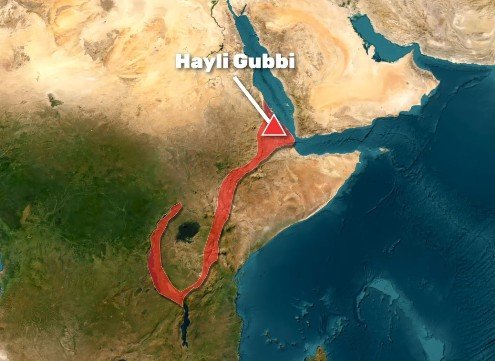
Hayli Gubbi isn’t just a random mountain; it sits in one of the most geologically active regions on Earth: the East African Rift System.
The Tectonic Tug-of-War
In this region, the Nubian Plate is gradually separating from the Somali Plate. This rifting process thins the Earth’s crust, allowing magma from the mantle plume beneath Afar to rise easily to the surface.
The Danger Zone
The volcano is located within the Afar Triple Junction, where the Red Sea Rift, Gulf of Aden Rift, and East African Rift meet. This makes the region a massive hotspot for volcanic and seismic activity. Hayli Gubbi itself is a shield volcano, characterised by its wide, gently sloping structure formed by highly fluid basaltic lava. While geological history suggested a 12,000-year dormancy, experts remain skeptical that it has truly been sleeping that long.
“I would be really surprised if [more than 12,000 years ago] really is the last eruption date.” — Juliet Biggs, Earth Scientist at the University of Bristol.
How the Volcano in Ethiopia affected global flights
You might wonder how an eruption in Ethiopia affects a flight landing in Delhi. The answer lies in the unique nature of volcanic ash. Unlike smoke from a fire, volcanic ash consists of tiny, abrasive particles of rock and glass that are hazardous to flight operations. When released into the atmosphere, these particles can cause catastrophic damage:
-
Engine Failure: Ash can melt inside jet engines and damage them.
-
Visibility: Thick plumes reduce visibility for pilots.
-
Contamination: Ash can settle on and contaminate airfields miles away from the source.
The November 23rd eruption sent thick plumes of smoke up to 15 km (49,000 feet) above sea level. This ash plume was so intense that it swept from Ethiopia across the Red Sea, passing through Oman and Yemen, and reaching as far as India.
Key Takeaways: The Eruption at a Glance
-
The Event: Eruption began on November 23rd, following a presumed 12,000-year dormancy.
-
Affected Altitude: Ash plumes reached heights between 8.5 km (5.2 miles) and 15 km above sea level.
-
The Reach: Several flights were cancelled, delayed, or rerouted as ash swept through Oman and Yemen toward Delhi.
-
Geology: The volcano is part of the Erta Ale range in the Afar Depression, a key site of the ongoing separation of the Nubian and Somali tectonic plates.
The eruption of Hayli Gubbi is a powerful reminder of the dynamic planet we live on. While travellers face frustrating delays, scientists gain a fascinating glimpse into the mechanics of the East African Rift. As the ash eventually settles, flight corridors will reopen, but the shifting plates of the Afar Depression ensure that this geologically restless region will continue to shape our landscape and our skies.
Watch Explanation Now: Click me