Cameroon Country Profile
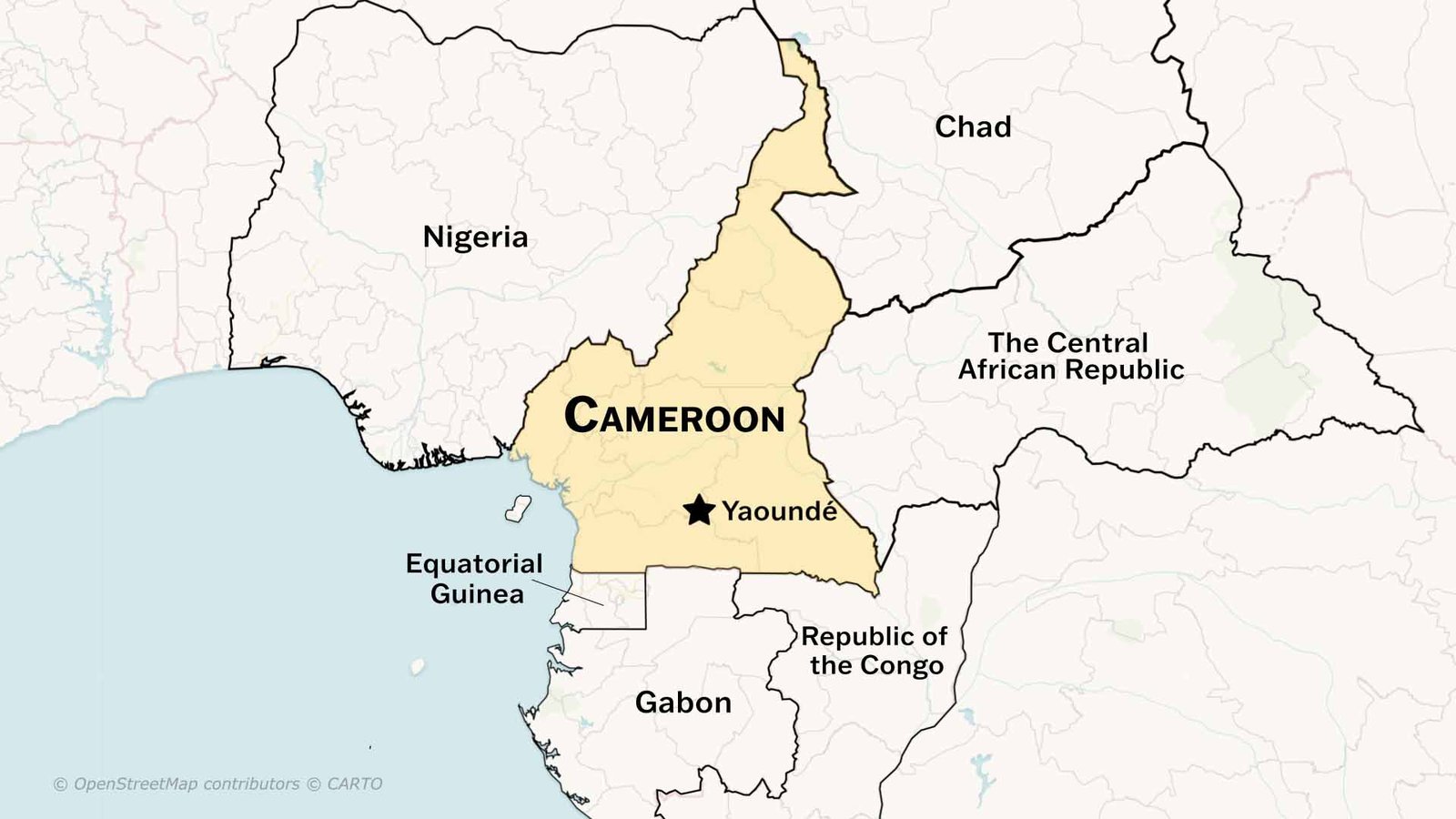
Cameroon is located in Central and West Africa, bordered by Nigeria to the northwest, Chad to the northeast, the Central African Republic to the east, the Republic of the Congo, Gabon, and Equatorial Guinea to the south, and the Gulf of Guinea and the Bight of Biafra to the west.
Cameroon Facts
- OFFICIAL NAME: Republic of Cameroon
- CAPITAL: Yaoundé
- POPULATION: 30,640,817 (2026)
- AREA: 475,442 square kilometers
- OFFICIAL LANGUAGES: French, English
- CURRENCY: Central African CFA Franc (XAF)
Cameroon Flag
The flag of Cameroon has three equal vertical stripes — green on the left, red in the middle, and yellow on the right — with a single yellow five-pointed star in the center of the red stripe. The green represents the forests and natural vegetation of the southern part of the country, the red represents unity and independence, and the yellow symbolizes the savannas of the north and the country’s mineral wealth. The yellow star at the center, known as the Star of Unity, represents the unity of the country. The colors are also associated with the Pan-African movement shared by many African nations.
Cameroon Geography
- Located at the crossroads of Central and West Africa, sometimes described as “Africa in miniature” due to its diverse landscapes.
- Borders: Nigeria to the northwest, Chad to the northeast, Central African Republic to the east, Republic of the Congo, Gabon, and Equatorial Guinea to the south.
- The Gulf of Guinea and the Bight of Biafra form the western coastline.
- The terrain is extraordinarily diverse, ranging from coastal mangroves and rainforests in the south to semi-arid Sahel regions in the far north.
- Mount Cameroon, an active volcano on the western coast, is the highest peak in West and Central Africa, rising to 4,095 meters.
- The Adamawa Plateau divides the northern and southern regions of the country.
- Lake Chad borders the far northeast corner of the country, shared with Chad, Niger, and Nigeria.
- The country has a tropical climate in the south and a drier, semi-arid climate in the north.
- Major rivers include the Sanaga, Wouri, and Bénoué.
Cameroon Government
- Cameroon is a presidential republic.
- The President serves as both head of state and head of government, holding extensive executive authority.
- Paul Biya has served as President since 1982, making him one of the longest-serving leaders in the world.
- Cameroon has a bicameral parliament consisting of the National Assembly and the Senate.
- The country has faced an ongoing anglophone crisis since 2017, with conflict in the English-speaking Northwest and Southwest regions.
History of Cameroon
- The region has been inhabited for thousands of years, with the Baka people among the earliest known inhabitants of the forested south.
- The Sao civilization flourished near Lake Chad from around the 6th century B.C.
- Portuguese explorers arrived along the coast in 1472, naming the Wouri River “Rio dos Camarões,” meaning “River of Prawns,” which gave Cameroon its name.
- Germany established a colonial protectorate over Kamerun in 1884.
- Following Germany’s defeat in World War I, the territory was divided between Britain and France under League of Nations mandates.
- The French portion gained independence on January 1, 1960, and the southern part of British Cameroon voted to join the French republic in 1961.
- Cameroon became a federal republic, combining the former French and British territories.
- Since independence, Cameroon has maintained relative stability compared to many of its neighbors, though political freedoms have been restricted.
People and Culture of Cameroon
- Cameroon is one of the most ethnically diverse countries in Africa, with over 250 ethnic groups and languages.
- The Bamileke of the western highlands and the Fulani of the north are among the most prominent ethnic communities.
- The Baka, also known as Pygmies, are among the oldest indigenous inhabitants of the central African forests.
- French and English are both official languages, reflecting the country’s dual colonial heritage, though French dominates.
- Islam is predominant in the north, Christianity in the south, with traditional indigenous beliefs also practiced.
- Ndolé, a dish made from bitter leaves stewed with groundnuts and meat or fish, is considered the national dish of Cameroon.
- Cameroon has a passionate football culture and is one of Africa’s most successful footballing nations.
Economy of Cameroon
- Cameroon has one of the strongest and most diversified economies in Central Africa.
- Oil production has been the largest contributor to export revenue, though reserves are declining.
- Agriculture is vital, with cocoa, coffee, cotton, and timber among the major export crops.
- The country is one of the world’s leading producers of cocoa.
- The service sector, including trade and transportation, plays a significant role in the economy.
- The ongoing anglophone conflict in the northwest and southwest regions has negatively impacted economic activity in those areas.
Cameroon Resources
- Cameroon has significant oil and natural gas reserves, particularly offshore in the Gulf of Guinea.
- Bauxite, iron ore, and cobalt deposits represent important but largely underdeveloped mineral resources.
- The country is a major producer of cocoa, coffee, and timber, all significant agricultural and forestry exports.
- Hydropower potential is significant, with several rivers providing energy generation capacity, including the Sanaga River.
- The Congo Basin rainforest extends into southern Cameroon, providing extensive timber and biodiversity resources.
Cameroon Wildlife
- Cameroon’s extraordinary geographic diversity supports one of the richest wildlife populations in Africa.
- The western lowland gorilla and chimpanzee inhabit the dense rainforests of the south and southwest.
- Forest elephants roam the southern rainforests, while savanna elephants are found in the northern regions.
- The Waza National Park in the far north protects lions, giraffes, elephants, and various antelope species.
- The Dja Faunal Reserve in the south, a UNESCO World Heritage Site, protects one of the largest and best-preserved rainforests in Africa.
- The drill monkey, one of Africa’s most endangered primates, is found in the forests of southwestern Cameroon.
- Cameroon’s diverse ecosystems make it a global biodiversity hotspot, though deforestation poses an increasing threat to its natural heritage.