Cuba Country Profile
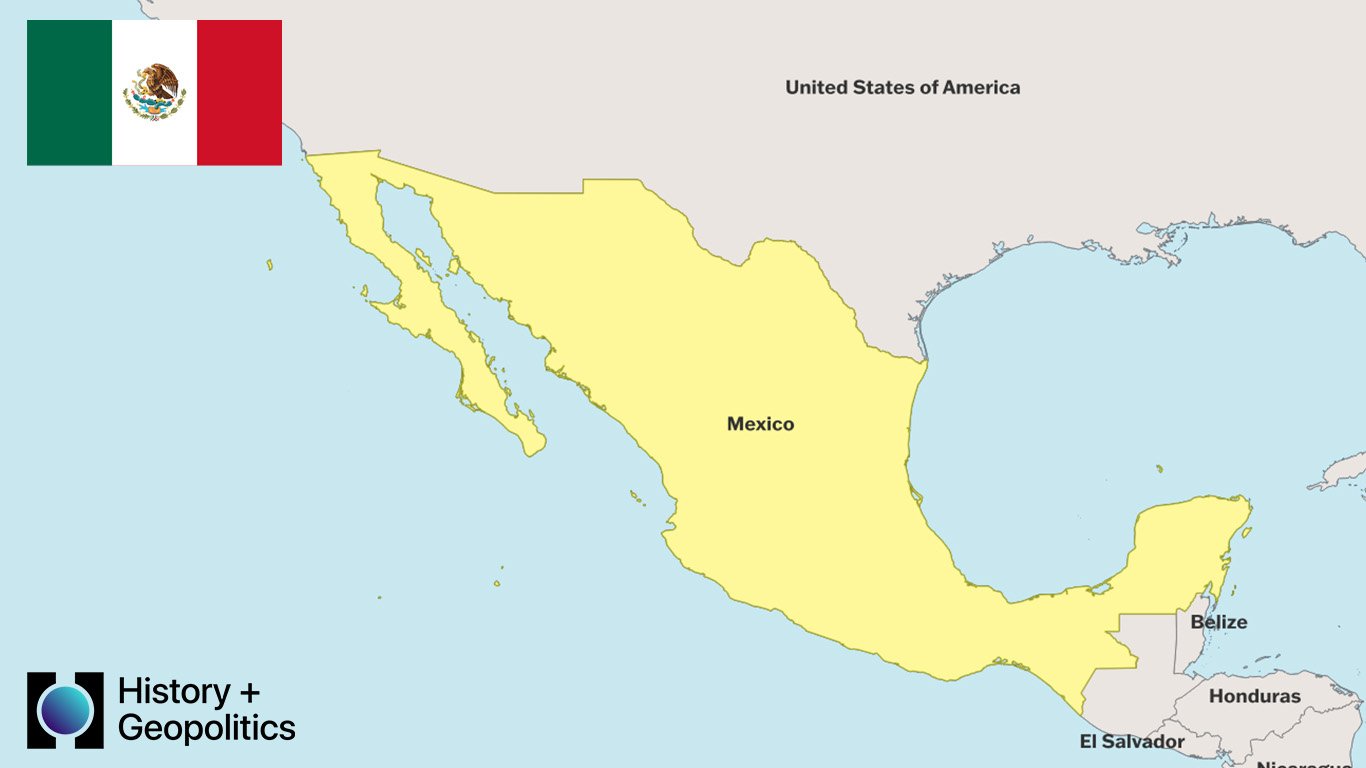
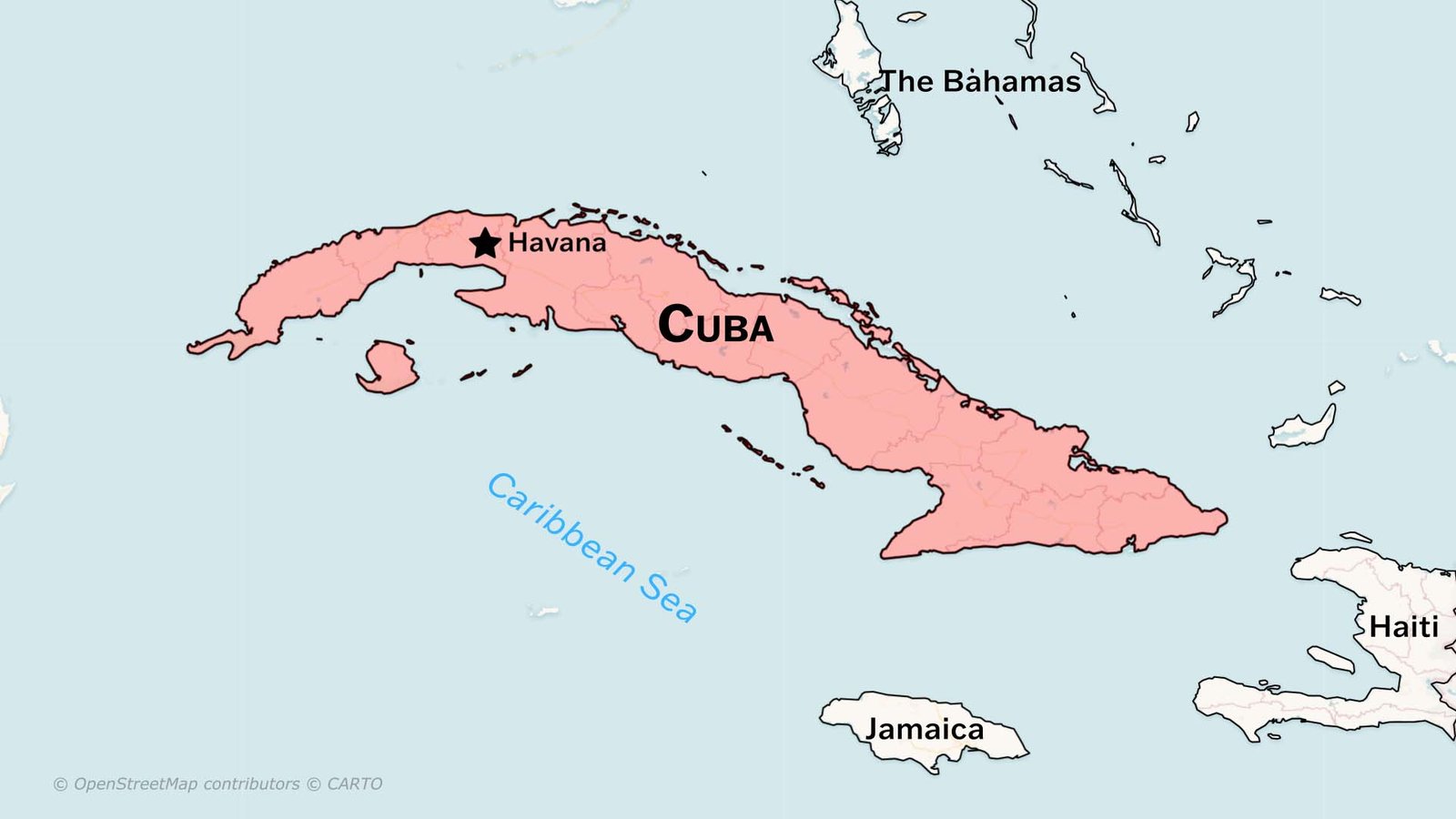
Cuba is located in the Caribbean, the largest island in the Caribbean Sea. It lies south of Florida in the United States, east of Mexico’s Yucatan Peninsula, west of Haiti, and north of Jamaica. It is surrounded by the Atlantic Ocean to the north and the Caribbean Sea to the south.
Cuba Facts
- OFFICIAL NAME: Republic of Cuba
- CAPITAL: Havana
- POPULATION: 10,892,659 (2026)
- AREA: 109,884 square kilometers
- OFFICIAL LANGUAGE: Spanish
- CURRENCY: Cuban Peso (CUP)
Cuba Flag
The flag of Cuba has five alternating horizontal stripes — three blue and two white — with a red equilateral triangle on the hoist side containing a single white five-pointed star known as the Lone Star. The blue stripes represent the three regions into which Cuba was divided during the colonial period. The white stripes symbolize the purity of the independence cause. The red triangle represents equality, fraternity, and the blood shed by those who fought for independence. The white star represents freedom and independence. The flag was designed in 1849 and officially adopted upon independence, becoming one of the most recognizable flags in the Caribbean.
Cuba Geography
- Located in the Caribbean, the largest island in the Caribbean Sea.
- Lies south of Florida, east of Mexico’s Yucatan Peninsula, west of Haiti, and north of Jamaica.
- Surrounded by the Atlantic Ocean to the north and the Caribbean Sea to the south.
- Cuba is an archipelago consisting of the main island, the Isle of Youth, and approximately 1,600 smaller islands and cays.
- The terrain is mostly flat to rolling plains, with rugged hills and mountains in the southeast.
- The Sierra Maestra mountain range in the southeast contains the highest peak, Pico Turquino, rising to 1,974 meters.
- Cuba has a tropical climate, moderated by trade winds, with a dry season and a rainy season.
- The island is located in the Atlantic hurricane belt and is periodically affected by tropical storms and hurricanes.
- Cuba has significant stretches of white sand beaches and coral reefs along its extensive coastline.
- The country has numerous rivers, though none are particularly long due to the island’s relatively narrow width.
Cuba Government
- Cuba is a single-party socialist republic governed by the Communist Party of Cuba.
- The President serves as head of state and the Prime Minister serves as head of government.
- Cuba has a unicameral National Assembly of People’s Power as its legislature.
- Miguel Díaz-Canel has served as President since 2018, succeeding Raúl Castro.
- Cuba is one of the last remaining communist states in the world.
- The United States has maintained a trade embargo against Cuba since 1962, significantly impacting the country’s economy.
History of Cuba
- The island was originally inhabited by the Taíno and Ciboney indigenous peoples for thousands of years before European contact.
- Christopher Columbus arrived in Cuba in 1492 and claimed the island for Spain.
- Spain colonized Cuba in the early 16th century, and the indigenous population was virtually wiped out by disease and forced labor.
- Cuba became one of the most important and wealthy Spanish colonies, driven by sugar production and enslaved African labor.
- Cuba remained under Spanish colonial rule longer than most of Latin America, gaining independence only in 1898 following the Spanish-American War.
- The United States exercised significant political and economic influence over Cuba in the early 20th century.
- Fulgencio Batista ruled Cuba as a dictator from 1952 until he was overthrown by Fidel Castro’s revolutionary movement on January 1, 1959.
- Castro established a communist government, nationalizing industries and aligning Cuba with the Soviet Union.
- The Cuban Missile Crisis of 1962 brought the world to the brink of nuclear war when Soviet missiles were discovered on the island.
- Following the collapse of the Soviet Union in 1991, Cuba entered a severe economic crisis known as the Special Period.
- Fidel Castro governed Cuba until 2008, when poor health led him to transfer power to his brother Raúl Castro.
People and Culture of Cuba
- Cuba’s population is of mixed heritage, with European, African, and indigenous ancestry reflected across the population.
- Spanish is the official and universally spoken language throughout the country.
- Christianity, particularly Roman Catholicism, is the largest religion, alongside Santería, an Afro-Cuban syncretic religion that blends Yoruba traditions with Catholicism.
- Ropa vieja, a dish of shredded beef slow-cooked in tomato sauce with peppers and onions, is considered the national dish of Cuba.
- Cuban music has had a profound global influence, with genres including son, salsa, mambo, and bolero originating on the island.
- Baseball is the most popular sport in Cuba, with a long and celebrated national tradition.
- Cuba is internationally recognized for its world-class ballet, art, and education system despite economic challenges.
Economy of Cuba
- Cuba has a state-controlled economy in which the government owns and operates most major industries and enterprises.
- Tourism is one of the most important sectors, with visitors drawn to Havana’s colonial architecture, beaches, and unique cultural atmosphere.
- Sugar, tobacco, and nickel are historically significant export commodities.
- Cuban cigars are internationally renowned and remain one of the country’s most famous exports.
- The economy has faced severe difficulties due to the US trade embargo, the collapse of Soviet support, and more recently the economic impact of the COVID-19 pandemic.
- Cuba has developed a notable medical and biotechnology sector, exporting doctors and medical expertise to numerous countries worldwide.
Cuba Resources
- Cuba has significant nickel and cobalt reserves, making it one of the world’s important producers of these minerals.
- The country has modest oil and natural gas reserves, located both onshore and offshore in the Gulf of Mexico.
- Fertile agricultural land supports sugar cane, tobacco, citrus, and coffee cultivation.
- Cuba’s beaches, coral reefs, and colonial cities represent valuable resources for the tourism industry.
- Timber resources exist in forested areas, particularly in the eastern mountainous regions.
Cuba Wildlife
- Cuba’s island isolation has produced a remarkable number of endemic species found nowhere else on Earth.
- The Cuban trogon, the national bird, displays the colors of the Cuban flag and inhabits the island’s forests.
- The bee hummingbird, the smallest bird in the world, is native to Cuba and found only on the island.
- The Cuban crocodile is a critically endangered species found only in Cuba’s Zapata Swamp, one of the largest wetlands in the Caribbean.
- The Zapata sparrow and Zapata wren are among numerous endemic bird species found in the Zapata Peninsula.
- Manatees and sea turtles inhabit the coastal waters and coral reefs surrounding the island.
- Cuba has established several protected areas and biosphere reserves to protect its unique endemic wildlife.