Guatemala Country Profile
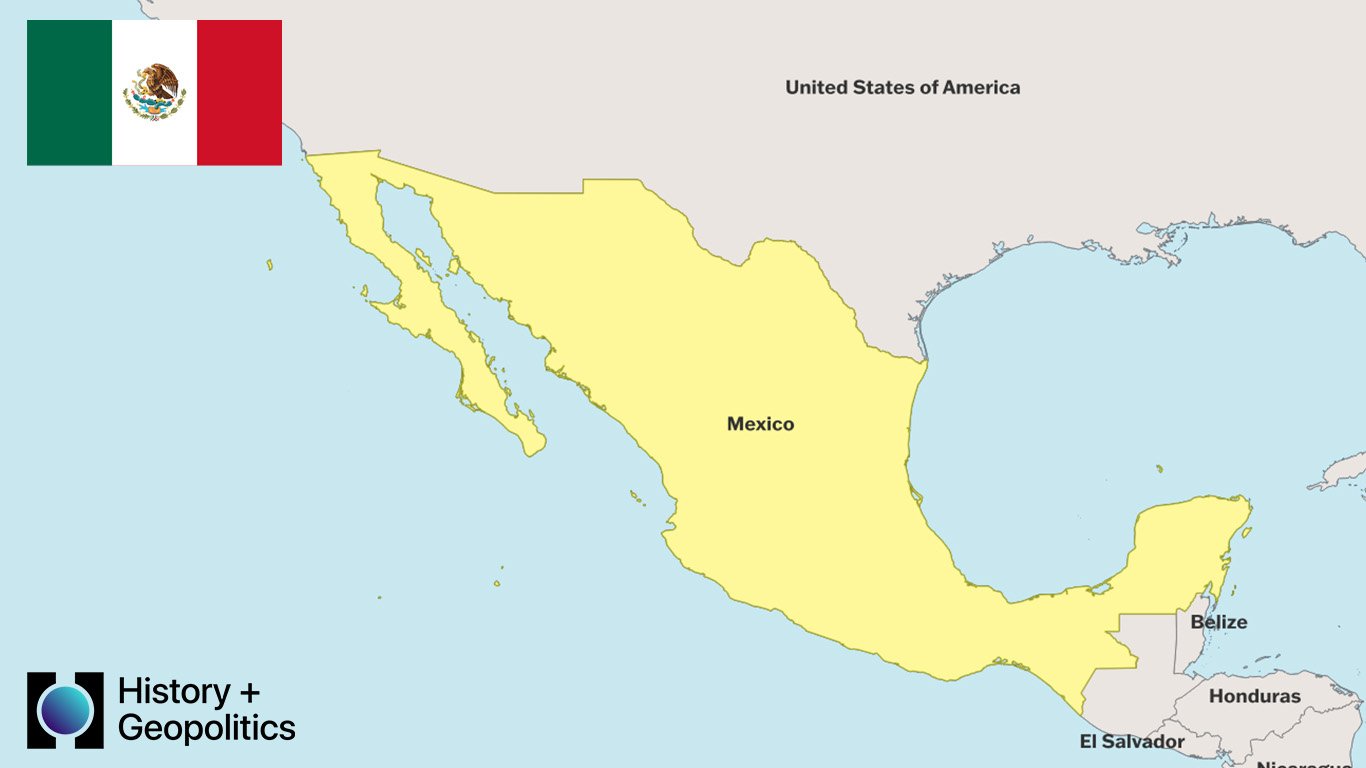
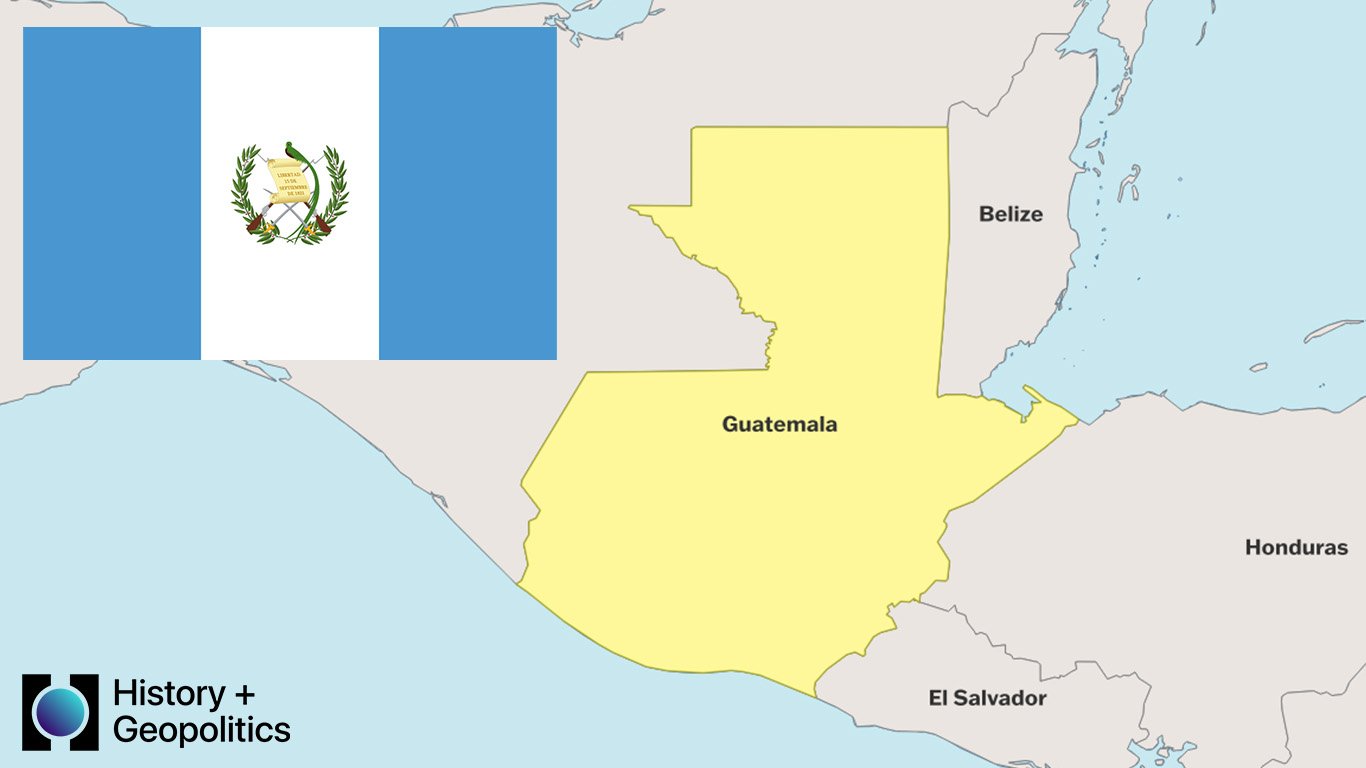
Guatemala is located in Central America, the most populous country in the region. It is bordered by Mexico to the north and west, Belize to the northeast, Honduras to the east, and El Salvador to the southeast. To the southwest lies the Pacific Ocean and to the northeast the Gulf of Honduras, an arm of the Caribbean Sea.
Guatemala Facts
- OFFICIAL NAME: Republic of Guatemala
- CAPITAL: Guatemala City
- POPULATION: 18,967,978 (2026)
- AREA: 108,889 square kilometers
- OFFICIAL LANGUAGE: Spanish
- CURRENCY: Guatemalan Quetzal (GTQ)
Guatemala Flag
The flag of Guatemala has three equal vertical stripes — sky blue on the left, white in the middle, and sky blue on the right — with the national coat of arms centered on the white stripe. The two blue stripes represent the Pacific Ocean and the Caribbean Sea that border Guatemala on either side. The white represents peace and purity. The coat of arms features a resplendent quetzal, the national bird and symbol of freedom, perched on a scroll bearing the date of Central American independence, September 15, 1821. Behind the quetzal are two crossed rifles and two crossed swords, representing Guatemala’s willingness to defend itself, and a laurel wreath symbolizing victory. The blue and white colors are shared with other Central American nations, reflecting their common history.
Guatemala Geography
- Located in Central America, the most populous country in the region.
- Borders: Mexico to the north and west, Belize to the northeast, Honduras to the east, El Salvador to the southeast.
- The Pacific Ocean lies to the southwest and the Gulf of Honduras, part of the Caribbean Sea, to the northeast.
- Guatemala has a diverse terrain ranging from the lowland Pacific coast to the central highlands and the lowland Caribbean coast and Petén jungle in the north.
- The Sierra Madre mountain range runs through the southern part of the country, including a chain of volcanoes.
- Tajumulco Volcano, rising to 4,220 meters, is the highest peak in Central America.
- Guatemala has more than 30 volcanoes, several of which remain active, including Santiaguito and Fuego.
- Lake Atitlán, surrounded by volcanoes in the western highlands, is one of the most spectacular lakes in the world.
- The Petén region in the north is covered by dense tropical rainforest and contains significant Maya archaeological sites.
- Guatemala has a varied climate, from tropical on the coasts to temperate in the highlands.
Guatemala Government
- Guatemala is a presidential republic.
- The President serves as both head of state and head of government.
- Guatemala has a unicameral Congress of the Republic.
- Bernardo Arévalo has served as President since January 2024, having won a historic election seen as a triumph against entrenched political corruption.
- His inauguration was delayed by legal challenges from prosecutors widely seen as attempting to prevent him from taking office, drawing significant international concern.
- Guatemala has experienced significant political instability and corruption challenges throughout its democratic history.
History of Guatemala
- Guatemala was the heartland of the ancient Maya civilization, one of the most sophisticated pre-Columbian civilizations in the Americas, which flourished for thousands of years.
- The Maya built impressive cities including Tikal, one of the largest Maya urban centers, deep in the Petén jungle.
- Spanish conquistador Pedro de Alvarado arrived in 1524 and conquered much of the region after fierce resistance from the indigenous Quiché Maya.
- Guatemala became the center of Spanish colonial administration for Central America, with the Captaincy General of Guatemala covering much of the region.
- Guatemala declared independence from Spain on September 15, 1821, along with the rest of Central America.
- The country was briefly part of the Mexican Empire and then the Federal Republic of Central America before becoming fully independent in 1838.
- A CIA-backed coup in 1954 overthrew the democratically elected President Jacobo Árbenz, who had implemented land reforms threatening US corporate interests.
- A brutal civil war lasting from 1960 to 1996 resulted in an estimated 200,000 deaths and widespread human rights abuses, with the military carrying out massacres of indigenous Maya communities.
- Peace accords signed in 1996 ended the civil war and established a framework for democratic governance.
- Guatemala has continued to struggle with corruption, poverty, and inequality in the post-war period.
People and Culture of Guatemala
- Guatemala has one of the largest indigenous populations in Latin America, with the Maya making up approximately 42% of the population.
- The mestizo population, of mixed Spanish and indigenous descent, makes up approximately 56% of the population.
- Spanish is the official language, though 22 Mayan languages are also officially recognized and widely spoken, particularly in rural communities.
- Roman Catholicism is the largest religion, though Evangelical Protestant Christianity has grown significantly and indigenous Maya spiritual practices continue alongside both.
- Pepián, a rich meat stew made with roasted seeds and chiles, is one of Guatemala’s most traditional and beloved dishes, with pre-Columbian roots.
- Tamales and black beans are central to everyday Guatemalan cuisine across all communities.
- Guatemala City’s Semana Santa, or Holy Week, celebrations are among the most spectacular in Latin America, featuring elaborate alfombras, or carpets, of colored sawdust and flowers laid in the streets.
Economy of Guatemala
- Guatemala has the largest economy in Central America, driven by agriculture, remittances, and services.
- Coffee, bananas, sugar, and palm oil are among the most important agricultural exports.
- Remittances from Guatemalans living abroad, particularly in the United States, are one of the largest sources of national income, exceeding foreign direct investment.
- The manufacturing sector includes textiles and apparel production in export processing zones.
- Guatemala faces significant development challenges including persistent poverty, malnutrition, and one of the most unequal income distributions in Latin America.
- Significant emigration to the United States, driven by economic insecurity and gang violence, has been a defining characteristic of Guatemalan society in recent decades.
Guatemala Resources
- Guatemala has fertile volcanic soils in the highland region, supporting coffee, cardamom, and vegetable production.
- The country has deposits of petroleum, nickel, and gold, though their development has been controversial due to environmental and indigenous rights concerns.
- Hydropower potential is significant given the country’s numerous rivers flowing from the highlands.
- The Petén jungle contains significant timber resources and biodiversity of global importance.
- Guatemala is the world’s largest producer of cardamom, which is one of the country’s most valuable agricultural exports.
Guatemala Wildlife
- Guatemala’s extraordinary geographic diversity, from Pacific coast to Caribbean lowlands and highland forests, supports remarkable biodiversity.
- The resplendent quetzal, one of the most spectacular birds in the Americas and the national bird of Guatemala, inhabits the cloud forests of the Sierra de las Minas and other highland areas.
- Jaguars and tapirs inhabit the tropical forests of the Petén region and the Maya Biosphere Reserve.
- The Petén region, which forms part of the Mesoamerican Biological Corridor, is one of the most important wildlife habitats in Central America.
- Howler monkeys and spider monkeys inhabit the remaining forests of the Petén and the Caribbean lowlands.
- Sea turtles, including leatherback and olive ridley species, nest on Guatemala’s Pacific beaches in significant numbers.
- Deforestation, agricultural expansion, and illegal wildlife trade pose the most significant threats to Guatemala’s biodiversity and natural habitats.