Luxembourg Country Profile
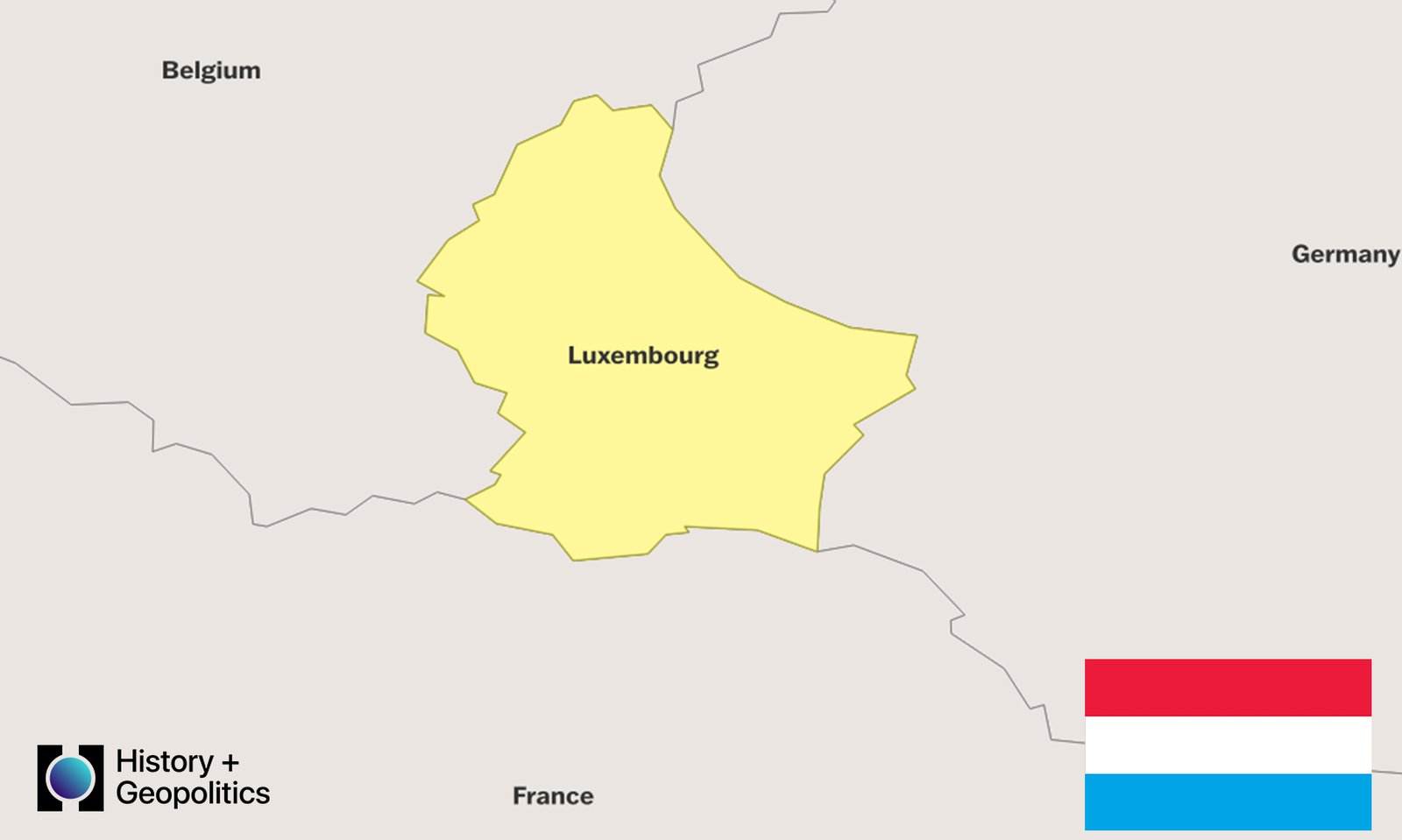
Luxembourg is located in Western Europe, a small landlocked grand duchy bordered by Belgium to the west and north, Germany to the east, and France to the south.
Luxembourg Facts
- OFFICIAL NAME: Grand Duchy of Luxembourg
- CAPITAL: Luxembourg City
- POPULATION: 687,448 (2026)
- AREA: 2,586 square kilometers
- OFFICIAL LANGUAGES: Luxembourgish, French, German
- CURRENCY: Euro (EUR)
Luxembourg Flag
The flag of Luxembourg has three equal horizontal stripes — red on top, white in the middle, and blue on the bottom. The colors are derived from the coat of arms of the House of Luxembourg, used since the 13th century. The flag is nearly identical to the flag of the Netherlands, differing only in the shade of blue, which is lighter in the Luxembourg flag. The red, white, and blue colors have been associated with Luxembourg since medieval times and were officially codified as the national colors in 1972. The flag reflects Luxembourg’s deep historical roots in the noble traditions of Western European heraldry.
Watch Luxembourg geography on youtube
Luxembourg Geography
- Located in Western Europe, one of the smallest countries on the continent.
- Completely landlocked, bordered by Belgium to the west and north, Germany to the east, and France to the south.
- Luxembourg is divided into two distinct geographic regions — the Ardennes in the north, known as the Oesling, and the more fertile and populated Gutland or Good Land in the south.
- The Ardennes region in the north is forested, hilly, and sparsely populated.
- The highest point, Kneiff, rises to 560 meters in the northern Ardennes.
- The Moselle River forms the southeastern border with Germany and is the most important waterway.
- Luxembourg has a temperate oceanic climate with mild winters and warm summers.
- Despite its small size, Luxembourg is one of the most densely populated countries in Europe.
- Approximately 47% of the total working population consists of cross-border commuters from Belgium, France, and Germany.
Luxembourg Government
- Luxembourg is a constitutional monarchy and parliamentary democracy.
- Grand Duke Henri serves as head of state, making Luxembourg the world’s only remaining grand duchy.
- The Prime Minister serves as head of government, holding executive authority.
- Luxembourg has a unicameral parliament called the Chamber of Deputies, consisting of 60 members.
- Luc Frieden has served as Prime Minister since November 2023.
- Luxembourg is a founding member of the European Union and NATO, and hosts several major EU institutions including the Court of Justice of the European Union and the European Court of Auditors.
- Luxembourg City serves as one of the four official capitals of the European Union.
History of Luxembourg
- The region has been inhabited since prehistoric times, with Celtic and later Roman settlements established in the area.
- The County of Luxembourg was founded in 963 A.D. when Siegfried, Count of the Ardennes, acquired a rocky promontory known as Lucilinburhuc, which became the foundation of Luxembourg City.
- The county grew into a powerful duchy and later a grand duchy over the medieval period.
- Luxembourg came under Burgundian, Habsburg, Spanish, Austrian, and French control at various points in its history, reflecting its strategic position at the crossroads of Western Europe.
- The Congress of Vienna in 1815 established Luxembourg as a Grand Duchy under the King of the Netherlands while also making it a member of the German Confederation with a Prussian garrison in its fortress.
- Luxembourg gained full independence and neutrality through the Treaty of London in 1867, which also required the demolition of its famous fortress.
- Luxembourg was occupied by Germany during both World War I and World War II.
- The Battle of the Bulge in December 1944 was fought partly on Luxembourg’s soil and the country was liberated by Allied forces.
- Luxembourg abandoned its neutrality after World War II and became a founding member of NATO in 1949.
- Luxembourg was one of the six founding members of the European Coal and Steel Community in 1951, which eventually evolved into the European Union.
People and Culture of Luxembourg
- Luxembourg has one of the most internationally diverse populations in the world, with foreigners making up approximately 47% of the total population.
- The largest foreign communities are Portuguese, French, Italian, Belgian, and German nationals.
- Luxembourgish, French, and German are all official languages, with Luxembourgish being the national language and the mother tongue of native Luxembourgers.
- Most Luxembourgers speak three or more languages fluently, making the country one of the most multilingual in the world.
- Roman Catholicism is the predominant religion, practiced by approximately 70% of the population.
- Judd mat Gaardebounen, smoked collar of pork served with broad beans, is considered the national dish of Luxembourg.
- Gromperekichelcher, potato pancakes seasoned with onions and parsley, are one of Luxembourg’s most beloved traditional snacks, particularly associated with outdoor markets and festivals.
- Luxembourg has a vibrant cultural scene with numerous museums, galleries, and festivals reflecting its multilingual heritage.
Economy of Luxembourg
- Luxembourg has the highest GDP per capita in the world, making it one of the wealthiest nations on Earth.
- The financial services sector is by far the most important, with Luxembourg being the largest investment fund center in Europe and the second largest in the world after the United States.
- Major international banks, insurance companies, and investment funds have headquarters or significant operations in Luxembourg.
- The steel industry was historically the backbone of the economy but has been almost entirely replaced by financial services since the late 20th century.
- Luxembourg attracts numerous multinational corporations, including Amazon, PayPal, and Skype, which have established European headquarters in the country due to its favorable tax and regulatory environment.
- The country has one of the lowest unemployment rates and highest average wages in the European Union.
Luxembourg Resources
- Luxembourg has limited natural resources, with iron ore deposits in the southern Minette region historically the most important, though largely exhausted.
- The Moselle River valley supports viticulture, with Luxembourg producing white wines and sparkling wines of increasing international recognition.
- Forests cover approximately one third of the country and provide timber resources.
- Luxembourg’s strategic location at the heart of Western Europe, combined with its political stability and multilingual workforce, is perhaps its most valuable economic resource.
- The country’s EU institutional presence and role as a financial hub represent significant intangible but enormously valuable economic assets.
Luxembourg Wildlife
- Luxembourg’s forests, river valleys, and agricultural land support a variety of Central European wildlife.
- Red deer and wild boar are found in the forested Ardennes region in the north.
- The European kingfisher and various heron species inhabit the Moselle and Sure river valleys.
- The black stork, a more secretive relative of the white stork, nests in Luxembourg’s quieter forested areas.
- Luxembourg has established several nature reserves and participates actively in regional conservation efforts coordinated with Belgium, Germany, and France.
- The Our River valley along the German border has been designated as a natural park and supports otters, beavers, and diverse aquatic wildlife.