Why Did the Industrial Revolution Begin in England?
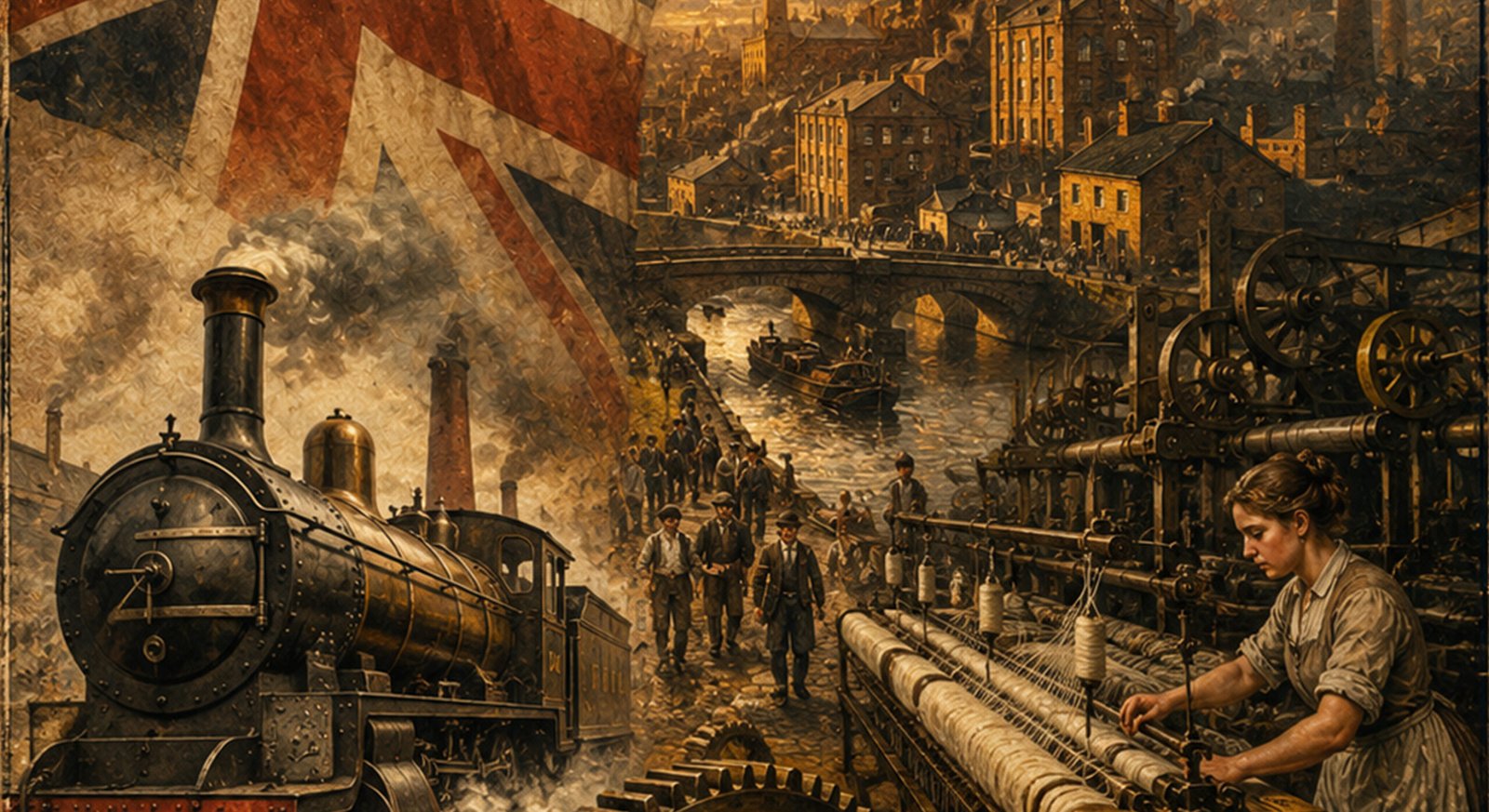
The Industrial Revolution began in England in the late 1700s. It transformed how people lived and worked — shifting from farming and handmade goods to factories and machines. Here is why it started in England.
The Steam Engine
- The steam engine was the most important invention of the era
- It allowed miners to dig deeper and extract more coal
- Coal became the main fuel powering factories and machines
- Steam powered the loom, replacing slow and expensive hand weaving
- Steam engines drove trains and ships, making transport faster and cheaper
Natural Resources
- England had large deposits of coal and iron — the two foundations of industry
- Coal powered the machines, iron built them
- Rivers provided waterpower for early mills
- Rivers also served as natural transport routes for raw materials and finished goods
The Enclosure Movement
- Wealthy landowners fenced off common farmlands under Enclosure laws
- Thousands of peasant farming families were forced off their land
- With nowhere to go, they moved to towns and cities
- They arrived just as factories were looking for workers
- This created a large and ready industrial workforce
Growth of Cities
- As factories grew, new towns and cities emerged around coalfields
- Places like Manchester and Birmingham grew from small towns to major cities within a generation
- England was urbanising faster than anywhere else in the world
The British Empire
- Britain’s empire spanned every continent
- Colonies created an enormous market for English manufactured goods
- Raw materials like cotton from India kept factories running at full speed
- The empire gave English industries both the customers and the supplies needed to grow rapidly
The Result
- By the early 1800s, England had transformed faster than any country in history
- The Revolution later spread to Europe, the United States, and beyond
- England got there first because technology, resources, workforce, and markets all came together at exactly the right time