The American History
American history has been shaped by many defining moments, but two stand above the rest — the American Revolution and the Civil War. One created the nation. The other saved it.
The American Revolution
Background
- By the mid-1700s, Britain controlled thirteen colonies along the eastern coast of North America
- The colonies were growing fast in population, wealth, and confidence
- Britain treated the colonies as a source of revenue rather than as equal subjects
Taxation and Resentment
- Britain’s mercantilist policies forced colonists to trade exclusively with Britain
- A wave of new taxes followed — the Stamp Act, the Townshend Acts, and others
- Colonists had no representation in the British parliament that imposed these taxes
- Their objection was simple: no taxation without representation
The Breaking Point
- In 1773, colonists disguised as Native Americans boarded British ships in Boston Harbor
- They dumped an entire shipment of tea into the water in what became known as the Boston Tea Party
- Britain responded by closing Boston’s port and tightening control over the colonies
- This only deepened colonial resentment and pushed the two sides closer to war
The War and Independence
- In 1775, the first shots of the Revolutionary War were fired at Lexington and Concord
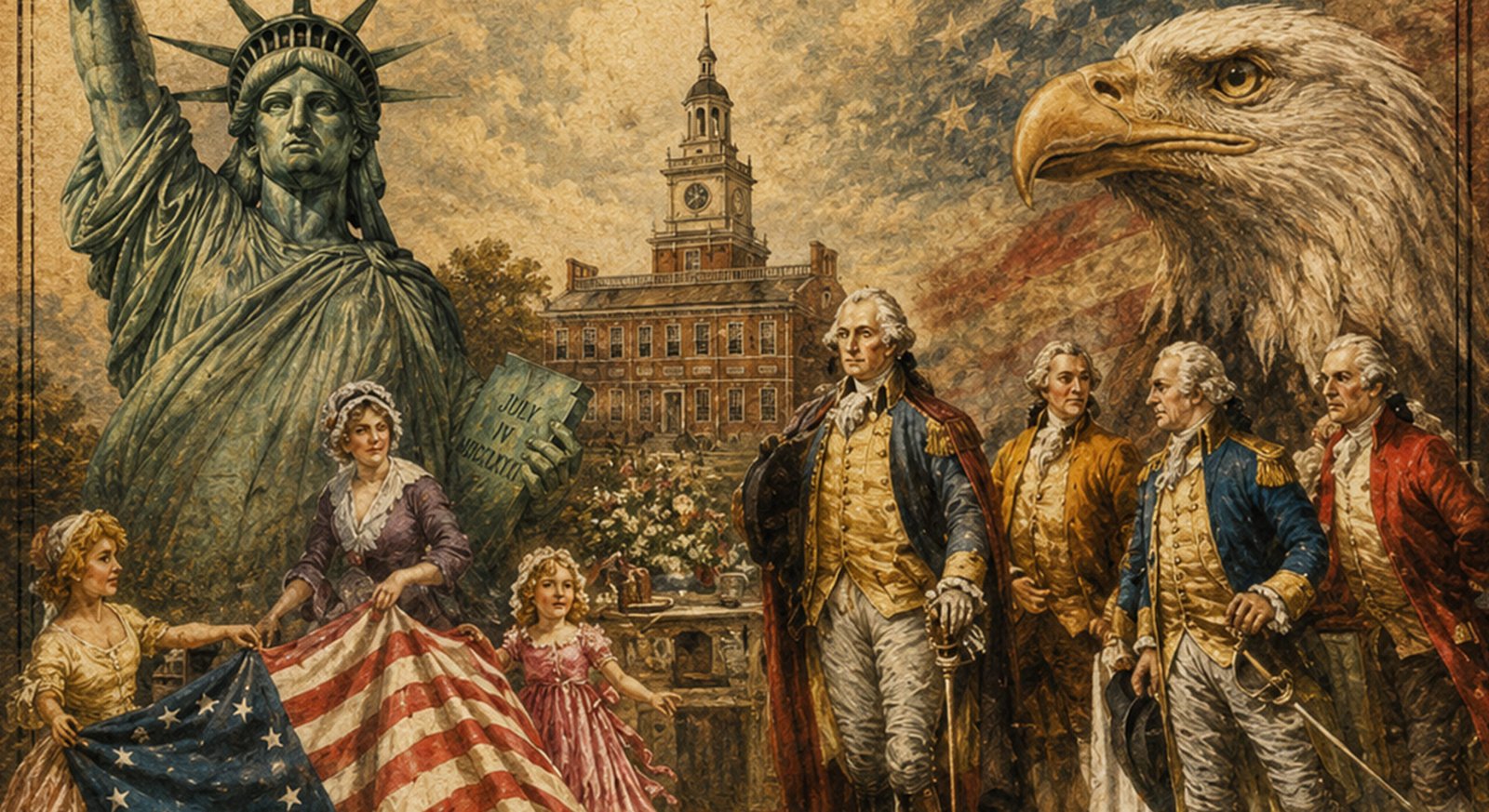
- On July 4, 1776, the Continental Congress formally declared independence
- Thomas Jefferson’s Declaration of Independence stated that all men were created equal and that government existed to serve the people
- The Continental Army, led by George Washington, faced a better equipped and better funded British military
- A turning point came when France entered the war on the American side, providing troops, money, and naval support
- In 1781, British forces surrendered at Yorktown, Virginia
- The Treaty of Paris in 1783 officially recognised American independence
- The American Revolution inspired independence movements around the world for generations
The American Civil War
The Root Cause
- Less than a century after independence, the nation was tearing itself apart
- The core issue was slavery
- Southern states had built their entire economy on the labour of enslaved people, particularly on cotton plantations
- Northern states had industrialised and opposed the expansion of slavery into new western territories
Growing Tensions
- Every new territory added to the United States reignited the same question — free state or slave state
- Compromises were made and repeatedly broken
- The country grew more divided with every passing year
Secession and War
- When Abraham Lincoln won the presidential election in 1860, Southern states saw it as a direct threat to their way of life
- One by one, Southern states voted to leave the Union and formed the Confederate States of America
- In April 1861, Confederate forces attacked Fort Sumter in South Carolina
- The Civil War had begun
The War
- The war lasted four years and was among the bloodiest in American history
- Major battles at Gettysburg, Antietam, and Bull Run left hundreds of thousands dead
- Families were torn apart and entire cities were destroyed
- In 1863, President Lincoln issued the Emancipation Proclamation, declaring all enslaved people in Confederate states to be free
- The war was no longer just about preserving the Union — it was now openly a war against slavery
The End
- In April 1865, Confederate General Robert E. Lee surrendered to Union General Ulysses S. Grant
- The war was over and the Union had survived
- Slavery was abolished through the Thirteenth Amendment later that year
Two Wars, One Nation
- The Revolution gave America its independence
- The Civil War determined what kind of nation it would truly be
- The Revolution was fought against foreign control
- The Civil War was fought against division from within
- Together, these two conflicts defined the values, the struggles, and the character of the United States
- A country born from resistance and tested by division emerged stronger from both