Croatia Country Profile
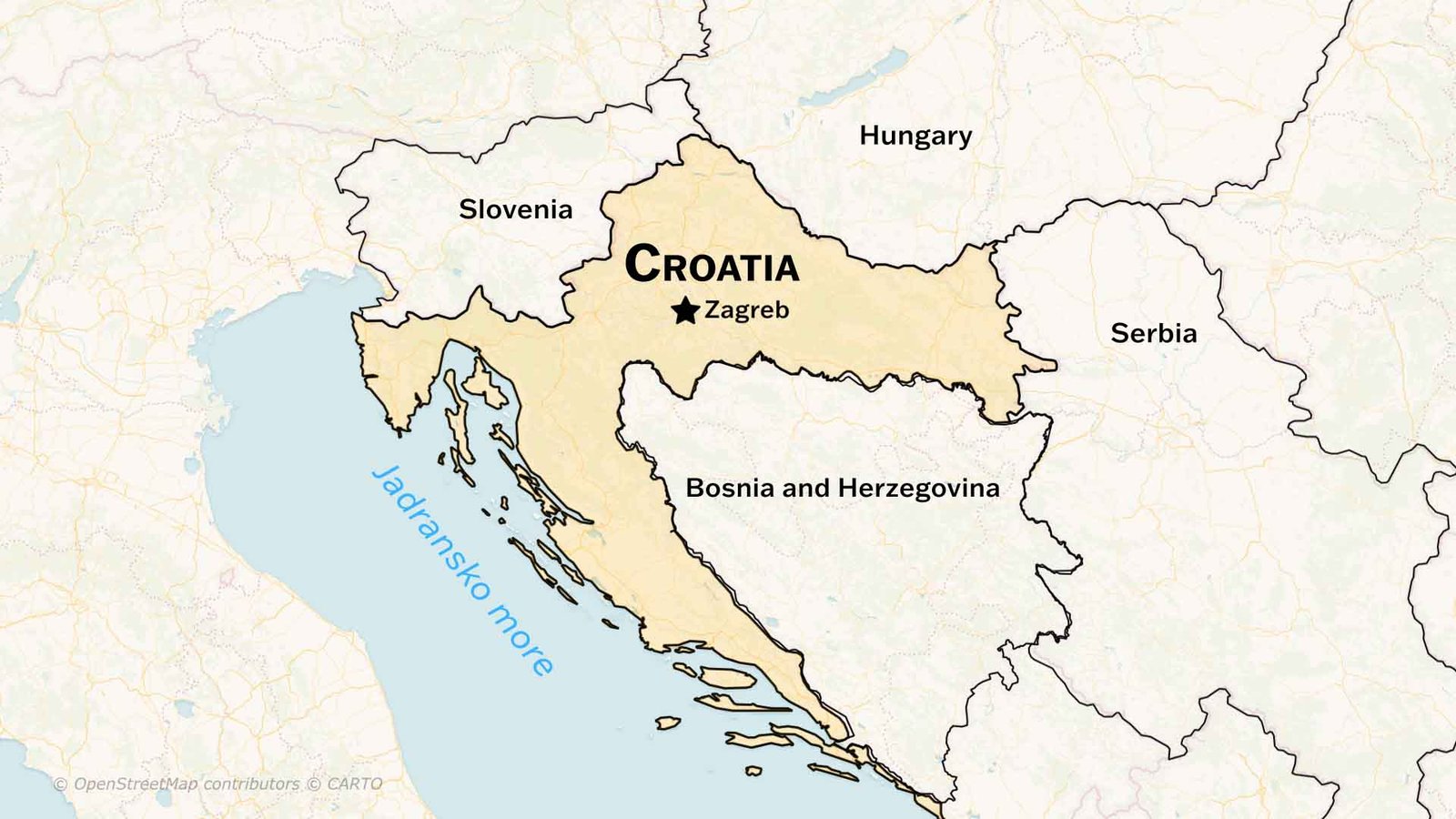
Croatia is located in Southeastern Europe, at the crossroads of Central Europe, the Balkans, and the Mediterranean. It is bordered by Slovenia to the northwest, Hungary to the northeast, Serbia to the east, Bosnia and Herzegovina and Montenegro to the southeast, and the Adriatic Sea to the west.
Croatia Facts
- OFFICIAL NAME: Republic of Croatia
- CAPITAL: Zagreb
- POPULATION: 3,822,345 (2026)
- AREA: 56,594 square kilometers
- OFFICIAL LANGUAGE: Croatian
- CURRENCY: Euro (EUR)
Croatia Flag
The flag of Croatia has three equal horizontal stripes — red on top, white in the middle, and blue on the bottom — with the Croatian coat of arms centered across all three stripes. The coat of arms features a red and white checkerboard shield, an ancient symbol of Croatian identity known as the šahovnica, which dates back to medieval Croatian kings. Above the shield are five smaller shields representing the historic regions of Croatia — Croatia, Dubrovnik, Dalmatia, Istria, and Slavonia. The red, white, and blue colors are Pan-Slavic colors shared by many Slavic nations, while the checkerboard shield is uniquely and unmistakably Croatian.
Croatia Geography
- Located in Southeastern Europe, at the crossroads of Central Europe, the Balkans, and the Mediterranean.
- Borders: Slovenia to the northwest, Hungary to the northeast, Serbia to the east, Bosnia and Herzegovina and Montenegro to the southeast.
- The Adriatic Sea forms the entire western coastline, stretching approximately 1,800 kilometers including islands.
- Croatia has over 1,200 islands, islets, and reefs along its Adriatic coast, making it one of the most island-rich coastlines in the Mediterranean.
- The country has a distinctive crescent shape, wrapping around Bosnia and Herzegovina.
- The terrain includes the flat Pannonian Plain in the east, the mountainous Dinaric Alps in the center, and the rugged Dalmatian coast in the southwest.
- The highest peak, Dinara, rises to 1,831 meters on the border with Bosnia and Herzegovina.
- The Plitvice Lakes, a series of terraced lakes and waterfalls in the interior, are a UNESCO World Heritage Site.
- Croatia has a Mediterranean climate along the coast and a continental climate in the interior.
Croatia Government
- Croatia is a parliamentary republic.
- The President serves as head of state with largely ceremonial duties.
- The Prime Minister serves as head of government, holding executive authority.
- Croatia has a unicameral parliament called the Croatian Parliament or Sabor.
- Croatia joined NATO in 2009 and the European Union in 2013.
- The country adopted the Euro as its currency on January 1, 2023.
History of Croatia
- The region has been inhabited since prehistoric times, with Illyrian and Celtic tribes among the earliest known peoples.
- The Romans established control over the territory, and the area became part of the Roman provinces of Dalmatia and Pannonia.
- Croatian tribes settled the region in the 6th and 7th centuries A.D.
- The Kingdom of Croatia was established in 925 A.D. under King Tomislav, one of the first Croatian rulers to unite the Croats.
- Croatia entered into a personal union with Hungary in 1102, a relationship that lasted for centuries.
- Following the Ottoman expansion into the Balkans, Croatia sought Habsburg protection in the 16th century.
- Croatia became part of Yugoslavia after World War I and remained so through most of the 20th century.
- Croatia declared independence from Yugoslavia on June 25, 1991.
- The Croatian War of Independence from 1991 to 1995 resulted in significant loss of life and displacement before Croatia secured its territorial integrity.
- Croatia has since developed into a stable democracy and has integrated successfully into European institutions.
People and Culture of Croatia
- Croatians make up approximately 90% of the population, with small Serb, Bosniak, and other minority communities.
- Croatian is the official language, written in the Latin alphabet, and is closely related to Serbian and Bosnian.
- Roman Catholicism is the predominant religion, practiced by the vast majority of the population.
- Peka, a slow-cooked dish of meat and vegetables prepared under a bell-shaped lid covered with hot embers, is one of Croatia’s most traditional and beloved dishes.
- Štrukli, a pastry filled with cheese, is a specialty of the Zagreb region.
- Croatia has a rich cultural heritage, with influences from Mediterranean, Central European, and Balkan traditions.
- Dalmatian klapa singing, a form of traditional acapella harmony, is recognized by UNESCO as intangible cultural heritage.
Economy of Croatia
- Croatia has a developing market economy with tourism, manufacturing, and services as the main sectors.
- Tourism is the most significant contributor to GDP, with the Adriatic coastline, islands, and historic cities attracting millions of visitors annually.
- Dubrovnik, Split, and the Plitvice Lakes are among the country’s most visited destinations.
- The manufacturing sector includes food processing, chemicals, and shipbuilding.
- Croatia joined the Eurozone in 2023, adopting the Euro and deepening its integration with the European economy.
- The country faces challenges including an aging and declining population and significant emigration of young people to other EU countries.
Croatia Resources
- Croatia has modest oil and natural gas reserves, primarily in the Pannonian Basin in the east and offshore in the Adriatic.
- Hydroelectric power is an important energy resource, generated from rivers in the Dinaric highlands.
- The Adriatic coastline and islands represent Croatia’s most economically valuable natural resource through tourism.
- Fertile agricultural land in the Slavonian plains supports grain, fruit, and wine production.
- Croatia is known for its wine-growing regions, particularly in Dalmatia and Istria, producing distinctive local varieties.
Croatia Wildlife
- Croatia’s diverse landscapes, from the Pannonian Plain to the Dinaric Mountains and Adriatic coast, support a rich variety of wildlife.
- Brown bears, wolves, and lynx inhabit the remote forests of the Dinaric highlands and Gorski Kotar region.
- The griffon vulture nests on the cliffs of the island of Cres, home to one of the largest griffon vulture colonies in Europe.
- The Adriatic Sea supports diverse marine life, including dolphins, which are commonly seen around the Lošinj archipelago.
- The Neretva River delta in southern Croatia is an important wetland habitat for migratory birds.
- Croatia has established several national parks, including Plitvice Lakes and Kornati, to protect its natural and marine ecosystems.