Kyrgyzstan Country Profile
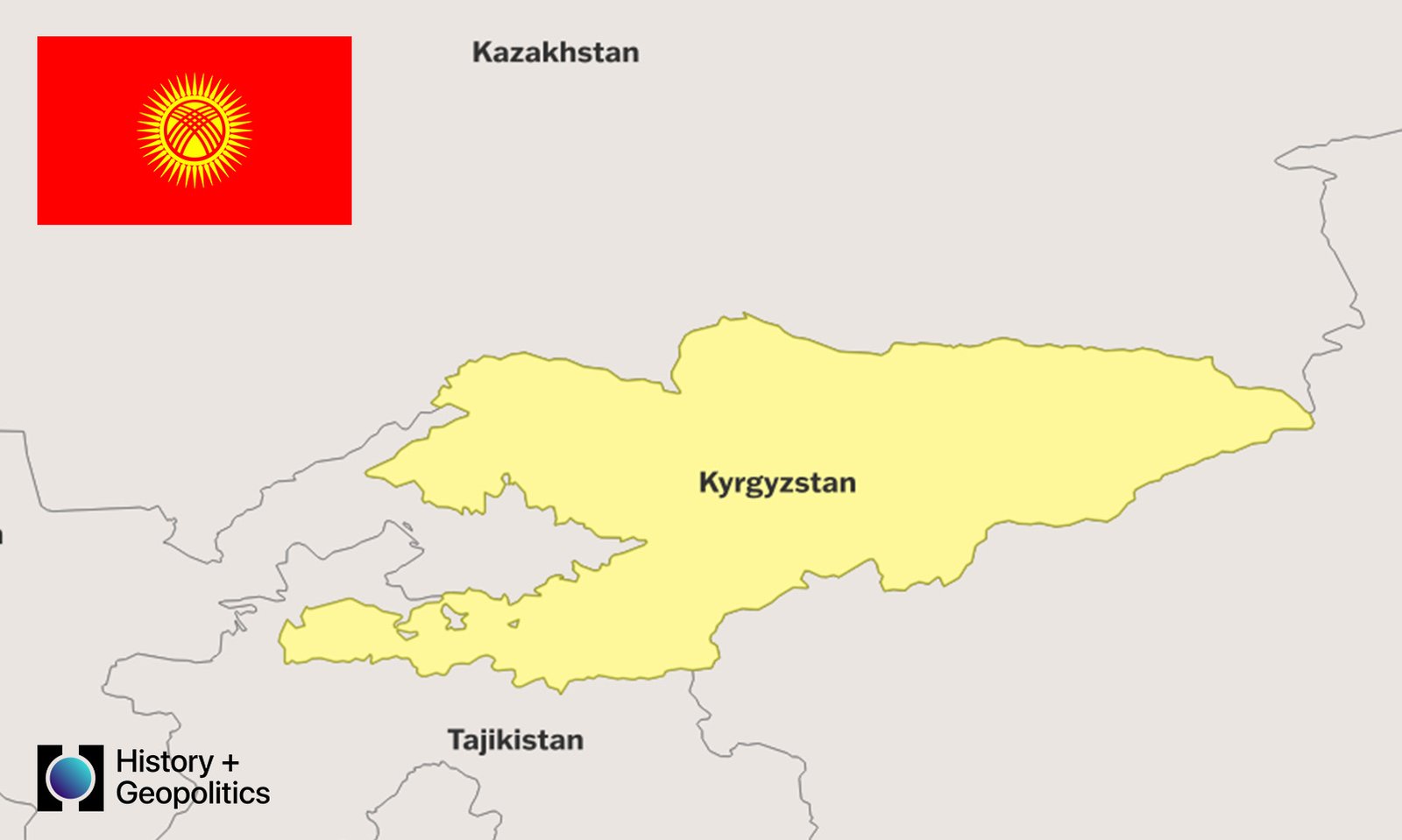
Kyrgyzstan is located in Central Asia, a landlocked country bordered by Kazakhstan to the north, China to the east, Tajikistan to the south, and Uzbekistan to the west.
Kyrgyzstan Facts
- OFFICIAL NAME: Kyrgyz Republic
- CAPITAL: Bishkek
- POPULATION: 7,400,465 (2026)
- AREA: 199,951 square kilometers
- OFFICIAL LANGUAGES: Kyrgyz, Russian
- CURRENCY: Kyrgyzstani Som (KGS)
Kyrgyzstan Flag
The flag of Kyrgyzstan has a red background with a yellow sun in the center containing a circular design of 40 rays and a stylized representation of the top of a traditional yurt, known as a tunduk. The red background represents bravery and valor, reflecting the color associated with the great Kyrgyz hero Manas. The yellow sun represents peace and prosperity. The 40 rays of the sun represent the 40 Kyrgyz tribes united by the hero Manas in the Kyrgyz national epic. The tunduk symbol at the center of the sun represents the hearth and home of the Kyrgyz people, as well as the universe and the unity of time and space in Kyrgyz cosmology.
Kyrgyzstan Geography
- Located in Central Asia, completely landlocked with no access to the sea.
- Borders: Kazakhstan to the north, China to the east, Tajikistan to the south, Uzbekistan to the west.
- Kyrgyzstan is one of the most mountainous countries in the world, with approximately 90% of the territory covered by mountains.
- The Tian Shan mountain range dominates the country, with peaks rising above 7,000 meters.
- Jengish Chokusu, also known as Peak Pobeda, is the highest point at 7,439 meters, on the border with China.
- Lake Issyk-Kul, located in the northeastern highlands, is one of the largest mountain lakes in the world and one of the deepest, and remarkably does not freeze in winter despite its altitude.
- The Fergana Valley in the southwest is the most fertile and densely populated region, shared with Uzbekistan and Tajikistan.
- The country has a continental climate with significant variation between the lowland valleys and the high mountain regions.
- Numerous glaciers in the Tian Shan and Pamir-Alai ranges feed the rivers and provide fresh water for much of Central Asia.
Kyrgyzstan Government
- Kyrgyzstan is a presidential republic.
- The President holds significant executive authority.
- Sadyr Japarov has served as President since 2021 following a political crisis triggered by disputed parliamentary elections in 2020.
- Kyrgyzstan has a unicameral parliament called the Jogorku Kenesh.
- Kyrgyzstan has experienced significant political instability since independence, with multiple governments overthrown through popular uprisings in 2005, 2010, and 2020.
- A new constitution adopted in 2021 significantly strengthened presidential powers.
History of Kyrgyzstan
- The Kyrgyz people are among the oldest ethnic groups in Central Asia, with historical records dating back over 2,000 years.
- The Epic of Manas, one of the longest epic poems in world literature, preserves the history, culture, and identity of the Kyrgyz people across generations.
- Kyrgyz tribes inhabited the Yenisei River region of Siberia before migrating to the Tian Shan mountains.
- The region came under Mongol influence in the 13th century and was incorporated into various Central Asian khanates over the following centuries.
- Russia gradually extended its control over the Kyrgyz steppe during the 19th century, completing annexation by 1876.
- Kyrgyzstan became part of the Soviet Union in 1936 as the Kirghiz Soviet Socialist Republic.
- Soviet collectivization forced the traditionally nomadic Kyrgyz people to settle permanently, transforming their way of life.
- Kyrgyzstan declared independence from the Soviet Union on August 31, 1991.
- The Tulip Revolution of 2005 and subsequent popular uprisings in 2010 and 2020 made Kyrgyzstan one of the most politically volatile post-Soviet republics.
People and Culture of Kyrgyzstan
- Kyrgyz people make up approximately 74% of the population, with Uzbeks forming the second largest group at around 14%, and smaller Russian and other communities also present.
- Kyrgyz is the official state language, a Turkic language closely related to Kazakh, while Russian retains co-official status and is widely used in government and business.
- Islam, predominantly Sunni, is practiced by approximately 90% of the population, though blended with pre-Islamic shamanic and animist traditions.
- Beshbarmak, boiled meat served over flat noodles, is the national dish, shared with Kazakh culture and central to hospitality and celebrations.
- Kumiss, fermented mare’s milk, is a traditional drink with deep cultural significance among the Kyrgyz people.
- Nomadic heritage remains central to Kyrgyz cultural identity, with the yurt, horse riding, and eagle hunting all important traditions.
- The national epic Manas, recited by specialized bards known as manaschi, is recognized by UNESCO as intangible cultural heritage.
Economy of Kyrgyzstan
- Kyrgyzstan is one of the poorer countries in Central Asia, with an economy based on agriculture, mining, and remittances.
- Gold mining is the most important export sector, with the Kumtor gold mine being one of the largest in Central Asia and a critical contributor to GDP.
- Agriculture employs a significant portion of the rural population, with livestock herding, wheat, and cotton production among the most important activities.
- Remittances from Kyrgyz workers abroad, particularly in Russia and Kazakhstan, are one of the largest sources of national income.
- Tourism has been growing, with visitors attracted to the Tian Shan mountains, Lake Issyk-Kul, and the nomadic cultural heritage of the country.
- Kyrgyzstan faces ongoing challenges including corruption, political instability, and limited economic diversification.
Kyrgyzstan Resources
- Gold is the most important mineral resource, with the Kumtor mine among the most significant gold deposits in the region.
- The country has deposits of coal, uranium, antimony, mercury, and rare earth elements.
- The Tian Shan glaciers and mountain rivers provide significant hydropower potential, making Kyrgyzstan a potential major electricity exporter in Central Asia.
- Fertile land in the Fergana Valley supports cotton, tobacco, and fruit production.
- Lake Issyk-Kul and the mountain landscapes are important resources for the growing tourism industry.
Kyrgyzstan Wildlife
- Kyrgyzstan’s dramatic mountain landscapes support a remarkable range of wildlife adapted to high-altitude environments.
- The snow leopard inhabits the remote Tian Shan and Pamir-Alai ranges, with Kyrgyzstan considered one of the most important snow leopard habitats in the world.
- The Marco Polo sheep, the largest wild sheep in the world with magnificent spiral horns, roams the high-altitude plateaus of eastern Kyrgyzstan.
- Brown bears, wolves, and lynx inhabit the forested mountain slopes.
- Lake Issyk-Kul is an important wintering ground for migratory birds, including bar-headed geese and various duck and wading bird species.
- The saker falcon, used in the ancient tradition of falconry, is found in Kyrgyzstan and is culturally significant.
- Conservation efforts focus on protecting the snow leopard and Marco Polo sheep, both of which face threats from poaching and habitat pressure in the high mountains.