Lebanon Country Profile
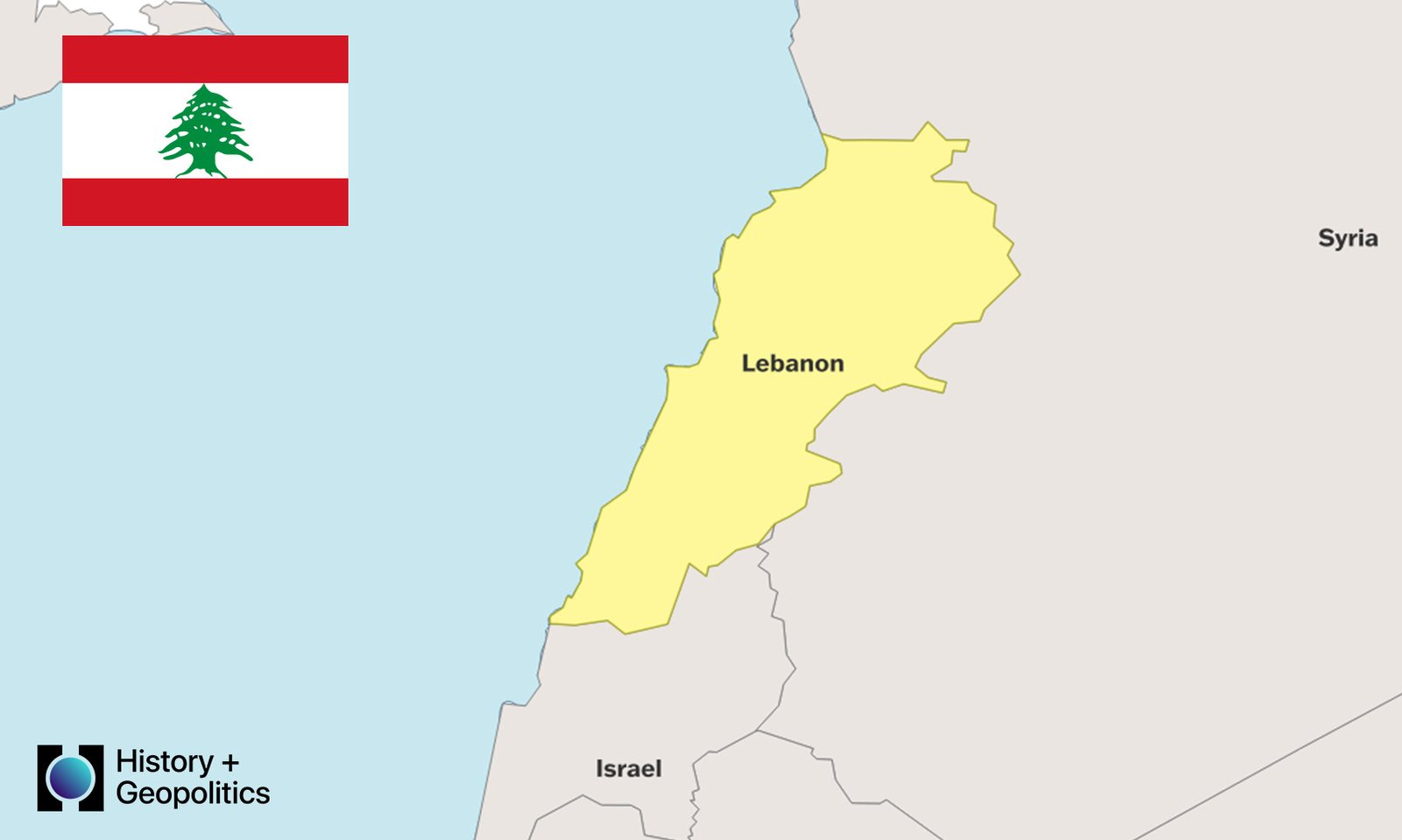
Lebanon is located in the Middle East, a small country in Western Asia bordered by Syria to the north and east, Israel to the south, and the Mediterranean Sea to the west.
Lebanon Facts
- OFFICIAL NAME: Lebanese Republic
- CAPITAL: Beirut
- POPULATION: 5,897,467 (2026)
- AREA: 10,452 square kilometers
- OFFICIAL LANGUAGE: Arabic
- CURRENCY: Lebanese Pound (LBP)
Lebanon Flag
The flag of Lebanon has three horizontal stripes — red on top, white in the wider middle, and red on the bottom — with a green cedar tree centered on the white stripe. The red stripes represent the blood shed by the Lebanese people in defense of their country. The white represents peace, purity, and the snow that covers the Lebanese mountains. The green cedar tree, the Cedar of Lebanon, is one of the oldest and most enduring symbols of the country, representing immortality, holiness, and resilience. The cedar has been mentioned in ancient texts including the Bible and the Epic of Gilgamesh and has been a symbol of Lebanon since antiquity.
Lebanon Geography
- Located in Western Asia, one of the smallest countries in the Middle East.
- Borders: Syria to the north and east, Israel to the south.
- The Mediterranean Sea forms the entire western coastline.
- Lebanon is one of the most densely populated countries in the Middle East.
- The terrain consists of a narrow coastal plain, two parallel mountain ranges, and a fertile interior valley.
- The Lebanon Mountains run parallel to the coast and include Qurnat as Sawda, the highest peak, rising to 3,088 meters.
- The Anti-Lebanon Mountains form the eastern border with Syria.
- The Bekaa Valley lies between the two mountain ranges and is the most important agricultural region.
- Lebanon has a Mediterranean climate along the coast, with hot dry summers and mild wet winters, while the mountains receive significant snowfall in winter.
- The Litani River is the most important river, flowing through the Bekaa Valley before turning westward to the Mediterranean.
Watch Lebanon Geography on YouTube
Lebanon Government
- Lebanon is a parliamentary republic with a unique confessional political system.
- The constitution divides political power among the country’s main religious communities in a system known as confessionalism.
- By convention, the President must be a Maronite Christian, the Prime Minister a Sunni Muslim, and the Speaker of Parliament a Shia Muslim.
- Joseph Aoun has served as President since January 2025, ending a more than two-year presidential vacancy.
- Nawaf Salam has served as Prime Minister since January 2025.
- Lebanon has a unicameral parliament called the National Assembly.
- The country has experienced chronic political paralysis and economic collapse in recent years.
History of Lebanon
- Lebanon is one of the oldest inhabited regions in the world, with settlements dating back over 7,000 years.
- The Phoenicians, one of the ancient world’s greatest maritime and trading civilizations, originated along the Lebanese coast and established colonies across the Mediterranean including Carthage.
- The region came under successive rule by Assyrians, Persians, Greeks, Romans, Arabs, Crusaders, and Ottomans over the centuries.
- Mount Lebanon’s rugged terrain provided refuge for various religious minorities, including Maronite Christians and Druze, over many centuries.
- France established a mandate over Lebanon following World War I.
- Lebanon gained independence from France on November 22, 1943, a date celebrated as Independence Day.
- A devastating civil war lasting from 1975 to 1990 killed approximately 150,000 people and caused widespread destruction.
- Syria maintained a dominant political and military presence in Lebanon until its withdrawal in 2005 following the Cedar Revolution.
- The assassination of Prime Minister Rafik Hariri in 2005 triggered a political crisis and deepened sectarian divisions.
- A war between Israel and Hezbollah in 2006 caused significant destruction particularly in southern Lebanon.
- The catastrophic Beirut port explosion on August 4, 2020, one of the largest non-nuclear explosions in history, killed over 200 people, injured thousands, and devastated large parts of the capital.
- Lebanon has been mired in one of the worst economic collapses in modern history since 2019, with the currency losing over 90% of its value.
- A conflict between Israel and Hezbollah escalated significantly in 2024, causing widespread destruction in southern Lebanon and southern Beirut.
Read more about China country Profile
People and Culture of Lebanon
- Lebanon’s population is a mosaic of religious communities, with Muslims making up approximately 68% and Christians approximately 32%.
- Within these broad categories, there are 18 officially recognized religious communities including Shia, Sunni, Druze, Maronite, Greek Orthodox, and others.
- Arabic is the official language, while French and English are widely spoken reflecting Lebanon’s colonial history and cosmopolitan culture.
- Kibbeh, a dish of minced meat mixed with bulgur wheat and spices, is considered Lebanon’s national dish.
- Mezze, a spread of small dishes including hummus, tabbouleh, fattoush, and various dips, is central to Lebanese dining culture and has become internationally recognized.
- Lebanon has a large and globally influential diaspora, with an estimated 14 million Lebanese and people of Lebanese descent living outside the country, far exceeding the domestic population.
- Beirut was historically known as the “Paris of the Middle East” for its vibrant cultural, intellectual, and social life.
Economy of Lebanon
- Lebanon has been experiencing one of the worst economic crises in modern global history since 2019.
- The banking sector collapsed, wiping out the savings of millions of Lebanese citizens.
- The Lebanese pound lost over 90% of its value against the US dollar, causing hyperinflation and widespread poverty.
- Prior to the crisis, Lebanon’s economy was based on banking and financial services, tourism, real estate, and trade.
- Remittances from the large Lebanese diaspora are now one of the most critical lifelines for the domestic population.
- The country faces enormous challenges in economic recovery, requiring fundamental political and structural reforms that have been repeatedly blocked by political deadlock.
Lebanon Resources
- Lebanon has limited natural resources, with offshore natural gas reserves in the Mediterranean being the most significant potential future resource, though exploration and development have been delayed by political disputes.
- The Bekaa Valley’s fertile soil supports the production of grapes, vegetables, and grain.
- Lebanon is internationally known for its wine production, with a winemaking tradition dating back thousands of years to Phoenician times.
- The Lebanese cedar, though reduced to small protected groves from its historic forests, remains a powerful cultural and natural symbol.
- The Mediterranean coastline and mountain landscapes historically supported significant tourism.
Lebanon Wildlife
- Lebanon’s varied terrain, from Mediterranean coast to high mountain peaks, supports a diverse range of wildlife for such a small country.
- The Lebanese mountain gazelle, once common, has been severely reduced by hunting and habitat loss.
- Brown bears were historically present in the Lebanese mountains but are now effectively extinct in the country.
- Lebanon lies along the Syrian-African Rift Valley bird migration route, making it an important stopover for millions of migratory birds each spring and autumn.
- The Horsh Ehden Nature Reserve in northern Lebanon protects one of the last remaining cedar groves alongside wolves, wildcats, and numerous bird species.
- Mediterranean monk seals were once present along the Lebanese coast but are now extremely rare visitors.
- Conservation efforts focus on protecting the remaining cedar groves, the Shouf Cedar Reserve, and the country’s wetland habitats from ongoing development and instability.