Liberia Country Profile
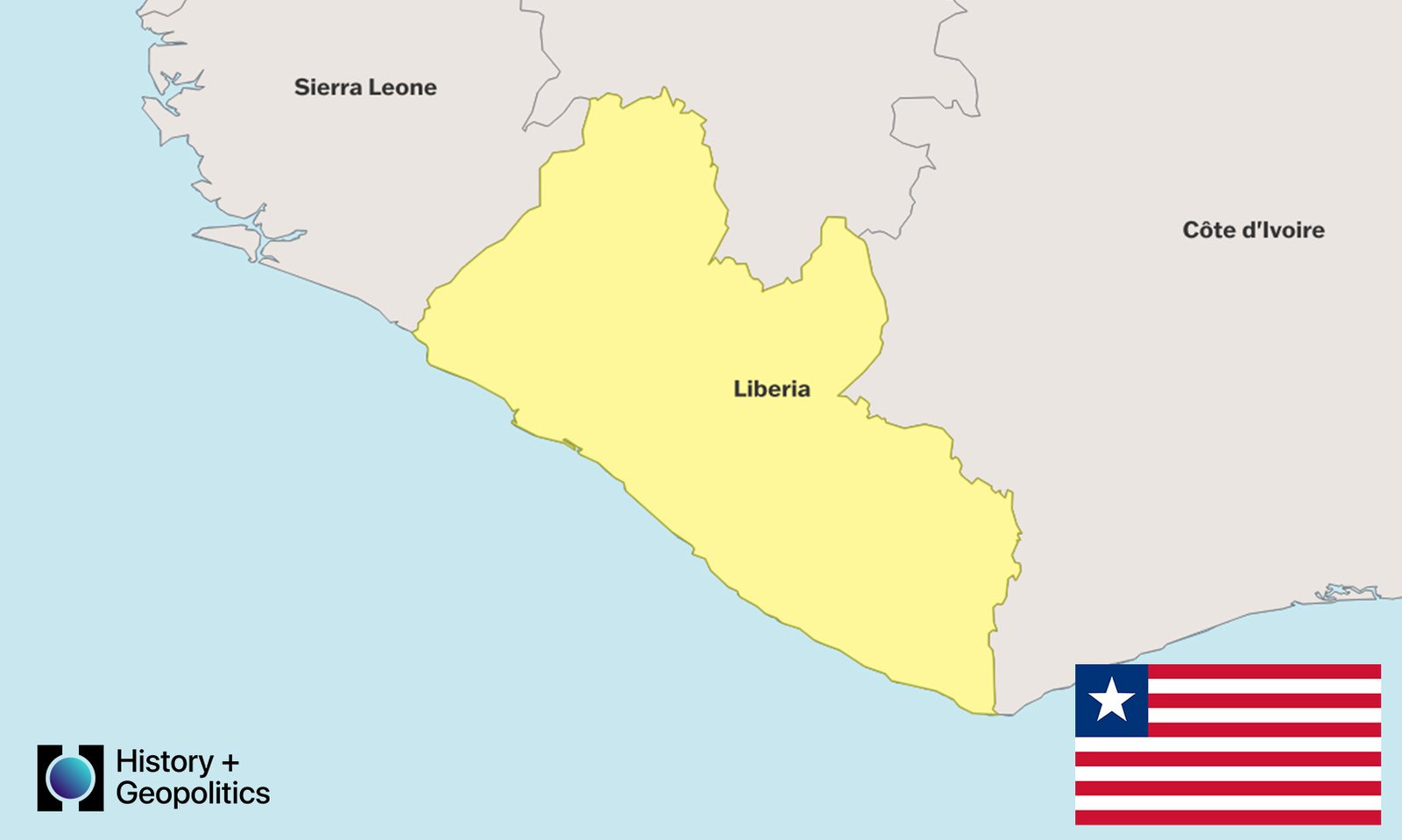
Liberia is located in West Africa, bordered by Sierra Leone to the northwest, Guinea to the north, Côte d’Ivoire to the east, and the Atlantic Ocean to the south and southwest.
Liberia Facts
- OFFICIAL NAME: Republic of Liberia
- CAPITAL: Monrovia
- POPULATION: 5,853,949 (2026)
- AREA: 111,369 square kilometers
- OFFICIAL LANGUAGE: English
- CURRENCY: Liberian Dollar (LRD)
Liberia Flag
The flag of Liberia closely resembles the flag of the United States, featuring eleven equal horizontal stripes alternating red and white, with a single white five-pointed star on a blue square canton in the upper left corner. The eleven stripes represent the eleven signatories of the Liberian Declaration of Independence. The red represents courage and valor, the white represents purity and cleanliness of government, and the blue represents the African mainland from which Liberia’s founders came. The lone white star represents the freedom granted to formerly enslaved people who settled the country, as well as Liberia’s status as the first and only republic in Africa at the time of its founding.
Liberia Geography
- Located in West Africa, with a coastline along the Atlantic Ocean to the south and southwest.
- Borders: Sierra Leone to the northwest, Guinea to the north, Côte d’Ivoire to the east.
- The terrain consists of a flat coastal plain rising to a rolling plateau and low mountains in the interior.
- Mount Wuteve in the Wologisi Range is the highest peak, rising to 1,440 meters in the northwest.
- Liberia has a tropical climate with a distinct rainy season from May to October and a dry season from November to April.
- The country has several major rivers including the Mano, Lofa, Saint Paul, and Cavalla rivers, all flowing southward to the Atlantic.
- The coastline features beaches, mangrove swamps, and lagoons stretching approximately 570 kilometers.
- Dense tropical rainforest covers much of the interior, making Liberia one of the most forested countries in West Africa.
Watch Liberia Geography on YouTube
Liberia Government
- Liberia is a presidential republic.
- The President serves as both head of state and head of government.
- Joseph Boakai has served as President since January 2024, having narrowly defeated incumbent George Weah in the 2023 presidential election.
- Liberia has a bicameral legislature consisting of the Senate and the House of Representatives.
- Liberia is the oldest republic in Africa, having been established as an independent nation in 1847.
History of Liberia
- The region has been inhabited by indigenous West African peoples for thousands of years, including the Kpelle, Bassa, Gio, and Kru peoples.
- The American Colonization Society began settling free African Americans and freed enslaved people on the West African coast from 1822.
- The settlement, known as Liberia, was seen by its American founders as a solution to the question of what to do with freed enslaved people in the United States.
- Liberia declared independence on July 26, 1847, becoming the first republic in Africa and the second independent country in the Americas founded by people of African descent.
- The Americo-Liberian minority, descended from the freed American slaves, dominated political and economic life for over a century.
- A military coup led by Master Sergeant Samuel Doe in 1980 ended Americo-Liberian dominance and introduced a period of instability.
- A devastating civil war from 1989 to 2003, involving multiple armed factions and warlords including Charles Taylor, killed an estimated 250,000 people and displaced millions.
- Ellen Johnson Sirleaf was elected President in 2005, becoming Africa’s first elected female head of state, and guided the country through post-war recovery.
- Liberia was severely affected by the West African Ebola epidemic from 2014 to 2016, which killed thousands and caused enormous economic damage.
- The country continues to rebuild its institutions and economy in the post-conflict period.
People and Culture of Liberia
- Liberia has 16 recognized indigenous ethnic groups, with the Kpelle being the largest, making up approximately 20% of the population.
- Other significant groups include the Bassa, Grebo, Gio, Mano, and Kru peoples.
- Americo-Liberians, descendants of freed American slaves, make up approximately 2.5% of the population but historically held disproportionate political and economic power.
- English is the official language, though Liberian English Creole and numerous indigenous languages are spoken throughout the country.
- Christianity is practiced by approximately 85% of the population, with Islam the second largest religion.
- Jollof rice served with various stews of greens, palm butter, or groundnuts is a staple of Liberian cuisine.
- Palm butter soup, a rich stew made from palm fruit cooked with meat or fish, is one of the most beloved traditional dishes.
Read more about Chad country profile
Economy of Liberia
- Liberia has one of the least developed economies in the world, still recovering from the devastation of civil war and the Ebola epidemic.
- Rubber production has historically been one of the most important industries, with the Firestone rubber plantation established in 1926 being one of the largest in the world.
- Iron ore mining is a significant and growing export sector, with Liberia possessing substantial high-grade iron ore deposits.
- Gold and diamond mining contribute to export revenues alongside iron ore.
- Agriculture employs the majority of the population, with subsistence farming of cassava, rice, and vegetables widespread.
- Liberia relies heavily on foreign aid and international assistance for development and public services.
Liberia Resources
- Liberia has significant iron ore deposits, particularly in the Nimba Range near the Guinea border, representing one of the country’s most important mineral resources.
- Rubber trees cover large areas of the country, supporting one of Africa’s most significant natural rubber industries.
- Gold and diamond deposits are found in various parts of the interior.
- Dense tropical rainforests covering much of the interior provide timber resources, though illegal logging has been a significant concern.
- The Atlantic coastline provides fishing resources and the country’s rivers support freshwater fisheries.
Liberia Wildlife
- Liberia’s tropical rainforests, among the most intact in West Africa, support extraordinary biodiversity including many endangered species.
- The western chimpanzee has one of its largest remaining populations in Liberia’s forests.
- The pygmy hippopotamus, one of the rarest large mammals in Africa, inhabits the rivers and forests of Liberia and is the country’s national animal.
- Forest elephants roam the remaining rainforests, with the Sapo National Park providing one of the most important protected habitats.
- The Liberian mongoose and Liberian greenbul are among the endemic species found only in Liberia.
- Sapo National Park in southeastern Liberia is the country’s largest protected area and one of the most important rainforest conservation areas in West Africa.
- Deforestation, illegal mining, and bushmeat hunting pose the greatest threats to Liberia’s extraordinary but vulnerable biodiversity.